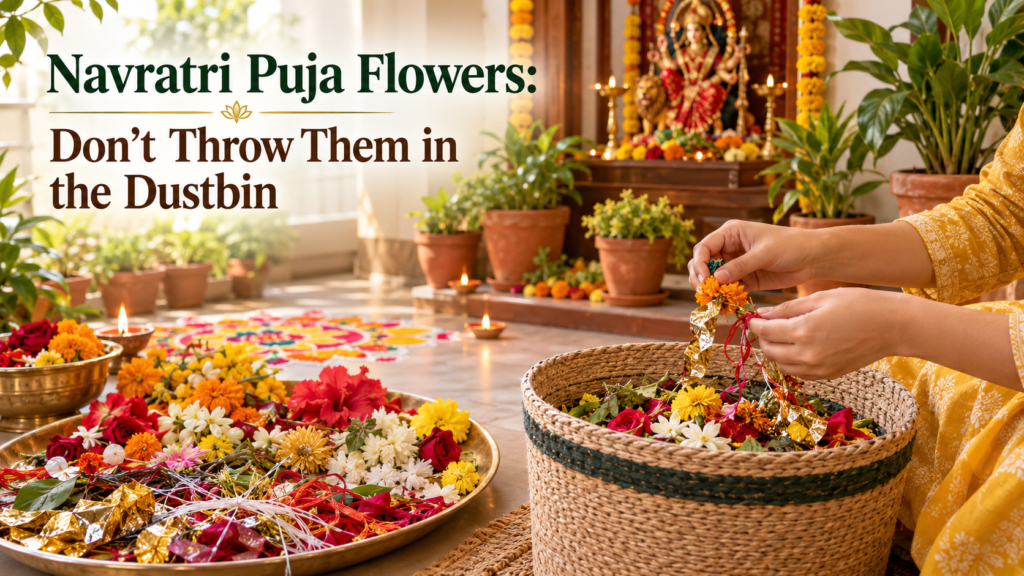
Navratri is a festival filled with devotion, beautiful decorations, diyas, rangoli, and fresh flowers. From marigolds and roses to hibiscus and other traditional blooms, flowers are an important part of पूजा and festive decoration. But once the celebrations are over, many households simply collect the used flowers and throw them into the dustbin.
However, there is a better and more sustainable option.
Instead of treating them as waste, you can reuse or compost them and turn them into something useful for your garden. Navratri puja flowers can become a valuable source of organic material when handled properly.
This simple practice can help reduce household waste while giving your plants a natural source of nutrients.
Why Should You Avoid Throwing Puja Flowers in the Dustbin?
During festivals, a large quantity of flowers, leaves, garlands, and other organic materials are generated. When these materials are mixed with regular household waste, they often end up in landfills along with plastic and other non-biodegradable waste.
Flowers are naturally biodegradable, so they do not need to become part of mixed garbage.
Navratri puja flowers can instead be separated from plastic threads, decorative materials, foil, artificial flowers, and other non-organic items. Once separated, the flowers can be composted or reused in several ways.
This small habit can encourage more responsible festive celebrations and introduce children and family members to the idea of sustainable living.
1. Compost Your Used Flowers
One of the easiest ways to reuse Navratri puja flowers is through composting.
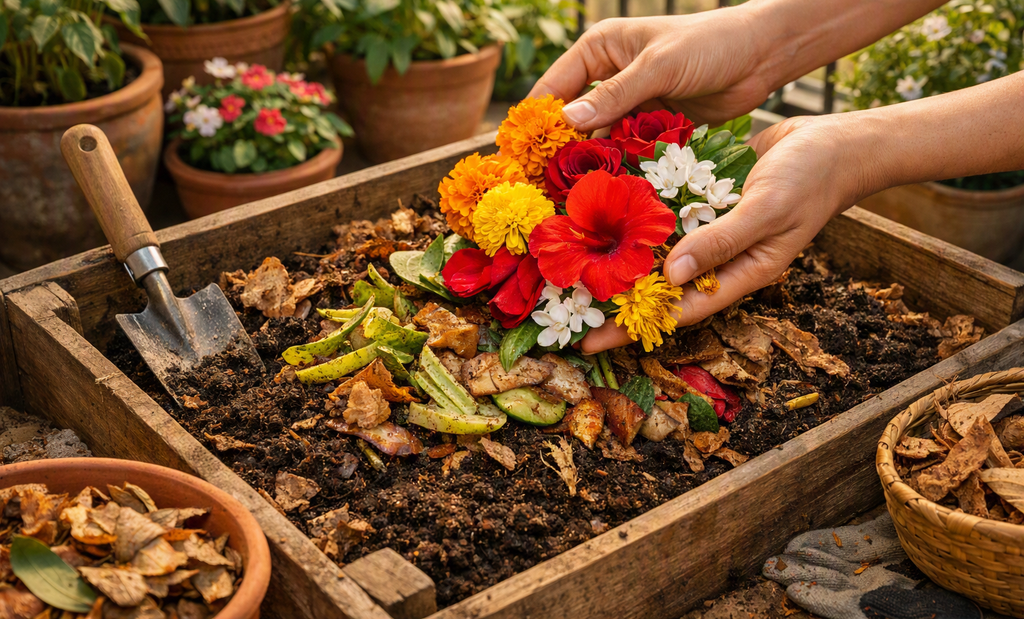
Remove the flowers from garlands and separate them from plastic, synthetic threads, ribbons, decorative beads, and other materials. You can then add the flowers to a home composting system along with suitable kitchen and garden waste.
Flowers provide organic matter that can break down naturally. Over time, properly composted organic material can become a useful soil amendment for gardens.
If you already maintain a compost bin, simply add the flowers in moderation and balance them with dry materials such as dried leaves or other suitable brown composting material.
2. Make Natural Flower Compost
If you have a terrace, balcony, or backyard garden, festival flowers can become part of your natural gardening cycle.
Cut or crush larger flowers and mix them into your composting material. Avoid adding flowers that contain large amounts of artificial decoration, glitter, plastic, or chemical-coated materials.
The goal is simple: organic flowers should return to the soil rather than becoming mixed waste.
After the composting process is complete, the resulting organic matter can be incorporated into garden soil according to your plants’ requirements.
3. Use Flowers for Mulching
Another option is to use suitable dried flowers as part of organic garden material.
Allow clean flowers to dry naturally and mix them with dry leaves or other appropriate organic materials. This material can be used carefully around plants as part of a natural mulch layer.
Mulching can help cover exposed soil, reduce evaporation, and gradually add organic matter as materials decompose.
However, avoid placing a thick layer of fresh flowers directly against plant stems. Excess moisture and poor airflow can encourage unwanted fungal problems.
4. Create Natural Floral Art or DIY Decorations
Not every flower needs to go directly into compost.
Some flowers can be dried and used for creative projects. You can make dried-flower artwork, decorative bowls, bookmarks, festive crafts, or simple natural decorations.
This is especially useful for families with children because it turns post-festival cleanup into a creative activity.
Instead of immediately discarding Navratri puja flowers, select clean and attractive blooms and allow them to dry in a shaded, well-ventilated area.
Once completely dry, they can be used for several decorative purposes.
5. Make Your Own Natural Garden Material
Gardeners can also experiment with turning dried organic flowers into smaller pieces before adding them to compost.
Drying reduces excess moisture and makes the material easier to mix with other composting ingredients. Combine it with suitable dry leaves, vegetable scraps, and other compostable garden waste in appropriate proportions.
Remember that composting is a natural decomposition process. Good airflow, suitable moisture, and a balance of green and brown materials are important for successful composting.
6. Keep Non-Biodegradable Materials Separate
While reusing Navratri puja flowers, one important step should never be ignored: sorting.
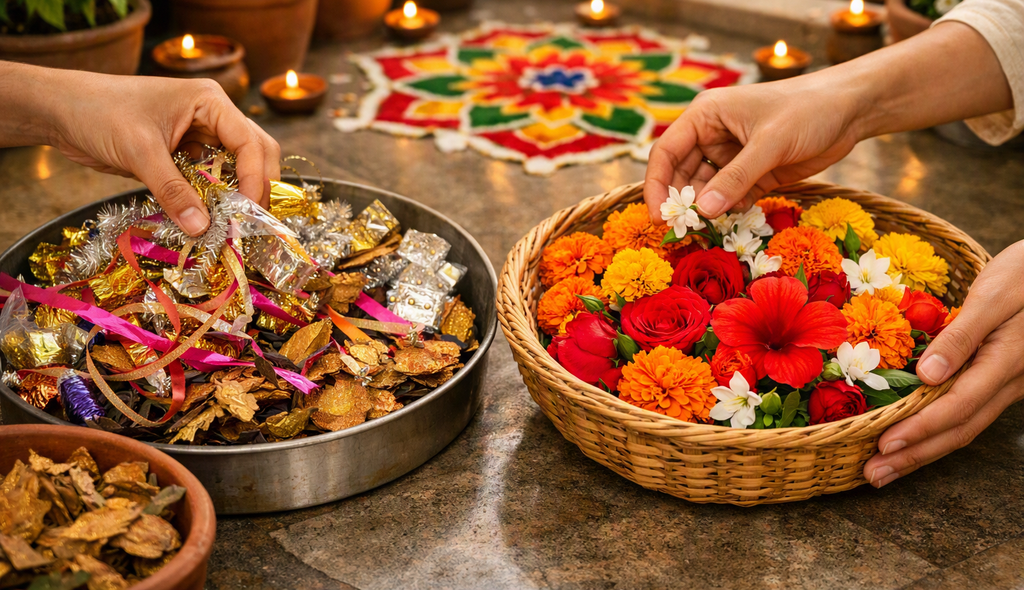
Festival garlands may contain plastic threads, synthetic ribbons, glitter, wires, decorative beads, foil, or artificial flowers. These materials should not be placed into your compost.
Before composting, carefully remove everything that is not naturally biodegradable.
This simple sorting habit makes the entire process more effective and prevents unwanted materials from entering your garden soil.
7. Teach Children the Value of Sustainable Festivals
Festivals provide a wonderful opportunity to teach children that celebrations and environmental responsibility can go together.
After Navratri, involve children in collecting flowers, separating recyclable and non-biodegradable decorations, and putting suitable organic material into the compost bin.
You can explain that flowers are part of nature and can return to nature through composting.
Such small experiences can build long-term awareness about waste reduction, composting, gardening, and responsible consumption.
8. Give Your Garden a Post-Navratri Green Reset
Once the festive decorations are removed, Navratri can also be a good time to give your garden some attention.
Clean plant areas, remove fallen leaves, check soil moisture, inspect plants for pests, and add suitable organic matter when required.
If you have accumulated a significant quantity of Navratri puja flowers, composting them can become part of your garden’s natural waste-management routine.
Instead of ending the festival with a bag of mixed waste, you can end it with a simple step toward a healthier garden.
A Small Change That Makes Festivals More Sustainable
The beauty of a festival should not end when the decorations are removed. Sustainable habits can continue even after the celebrations are over.
By separating and reusing Navratri puja flowers, households can reduce the amount of organic material entering mixed waste streams and make better use of something that would otherwise be discarded.
The next time you clean your puja space after Navratri, pause before reaching for the dustbin. Separate the flowers, remove non-biodegradable materials, and consider composting or reusing the organic portion.
Your flowers can have a second life—and your garden can benefit from it.
🌿 Give Your Garden the Care It Deserves with Super Maali
A healthy garden needs regular care, seasonal maintenance, proper soil management, pruning, watering, plant health checks, and the right organic inputs. If maintaining your balcony, terrace, lawn, or home garden feels difficult, Super Maali can help.
Super Maali provides professional gardening and plant-care solutions in Lucknow, including garden maintenance, terrace and balcony garden setup, kitchen garden solutions, plant care, and other urban gardening services.
Whether you want to create a greener home or need help maintaining your existing plants, the Super Maali team can help you care for your green space.
🌱 Super Maali – Greening Urban Spaces
Explore Super Maali: Visit Super Maali Home Page
Need gardening support? Contact Super Maali
Let this Navratri be more than a celebration of devotion—let it also be a celebration of nature, mindful living, and greener homes.