
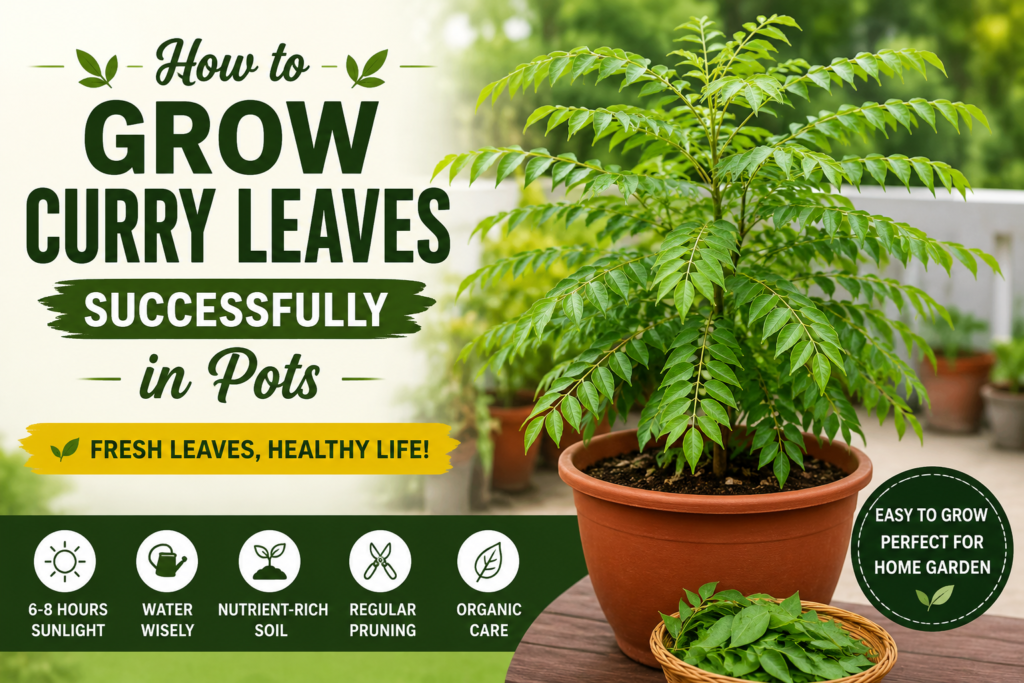
If you love Indian cooking, growing your own curry leaf plant is one of the best investments for your home garden. Fresh curry leaves add an unmatched aroma and flavor to dishes while offering numerous health benefits. The good news is that growing curry leaves successfully in pots is easy if you provide the right care.
Whether you have a balcony, terrace, or small backyard, this guide will help you learn everything you need to know about How to Grow Curry Leaves Successfully in Pots.
Why Grow Curry Leaves in Pots?
A curry leaf plant grows exceptionally well in containers and is perfect for urban gardeners. Container gardening allows you to:
- Move the plant according to sunlight requirements.
- Protect it from heavy rain and frost.
- Save space in apartments.
- Control soil quality and watering.
- Harvest fresh leaves throughout the year.
With proper care, a potted curry leaf plant can remain productive for over 15 years.
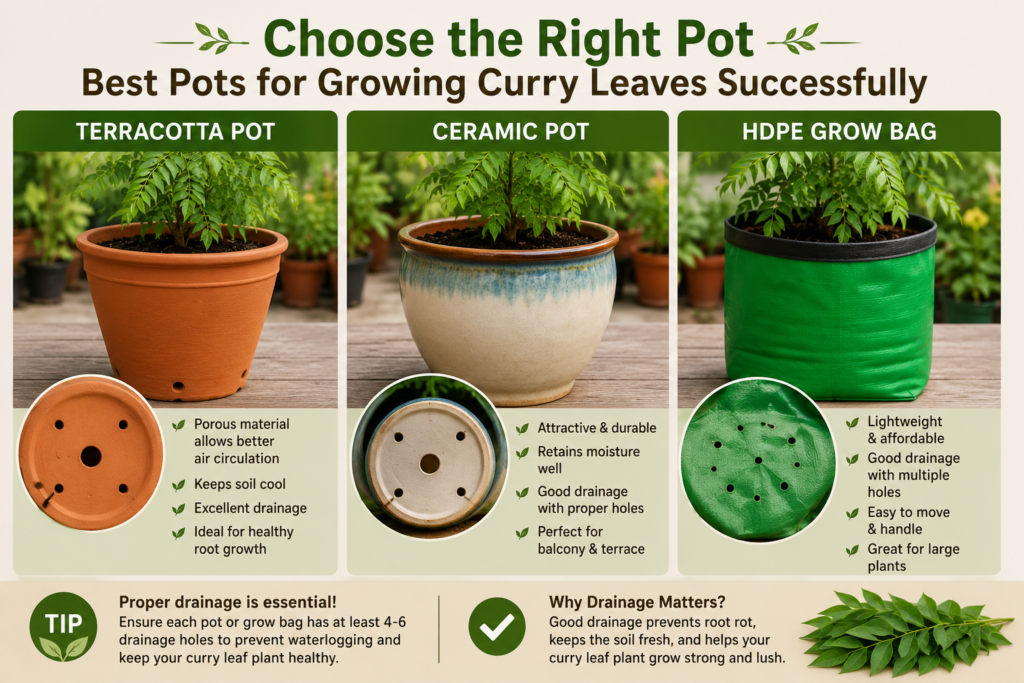
1. Choose the Right Pot
Selecting the correct container is the first step toward How to Grow Curry Leaves Successfully in Pots.
Choose:
- Pot size: 12–18 inches wide
- Depth: Minimum 15 inches
- Material: Terracotta, ceramic, or HDPE grow bags
- Drainage: At least 4–6 drainage holes
Avoid very small pots because curry leaf plants develop deep roots.
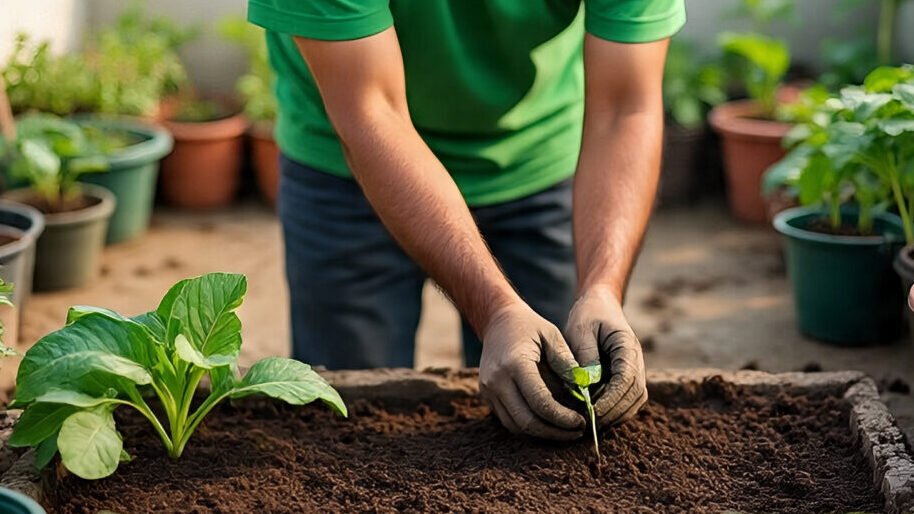
2. Prepare the Perfect Potting Mix
Healthy roots require loose, well-draining soil.
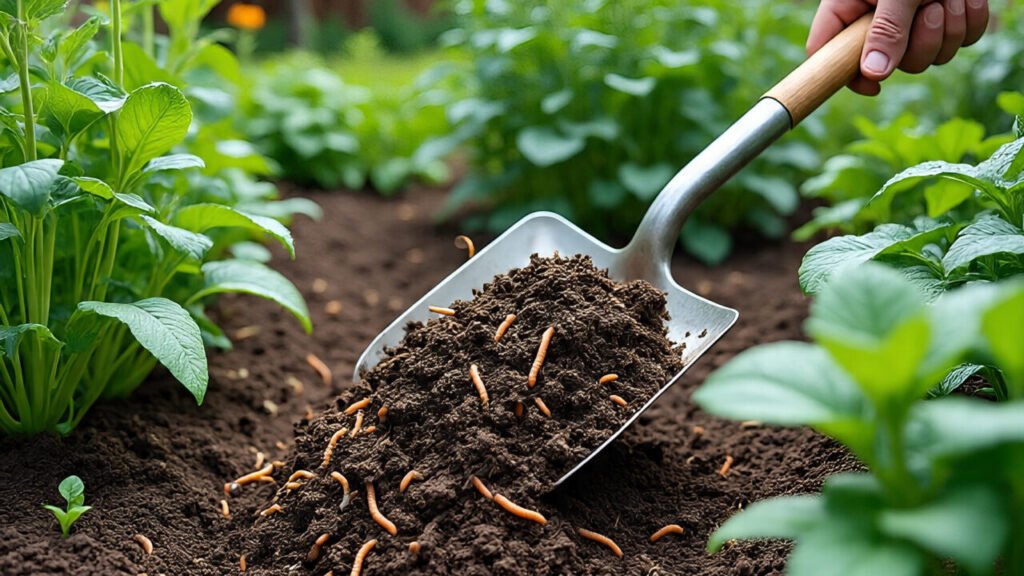
Recommended Soil Mix
- 40% Garden Soil
- 30% Vermicompost
- 20% Cocopeat
- 10% River Sand
Add a handful of neem cake powder to prevent soil pests naturally.
This mixture retains moisture while allowing excess water to drain easily.
3. Sunlight Requirements
Curry leaf plants love sunshine.
Provide:
- 6–8 hours of direct sunlight daily
- Morning sunlight is ideal
- Keep the pot near a south-facing balcony or terrace
Insufficient sunlight results in slow growth and pale leaves.
4. Watering Schedule
One of the biggest mistakes beginners make is overwatering.
Water only when:
- Top 2 inches of soil become dry
- Water deeply until excess drains out
Seasonal Watering
Summer
- Every 2–3 days
Monsoon
- Only when soil dries
Winter
- Every 5–7 days
Never let water remain standing inside the tray beneath the pot.
5. Fertilizing for Healthy Growth
Regular feeding produces lush green foliage.
Use organic fertilizers every month:
- Vermicompost
- Cow dung manure
- Mustard cake fertilizer (well diluted)
- Seaweed extract
- Banana peel compost
Avoid excessive chemical fertilizers because they reduce leaf aroma.
6. Pruning Encourages Bushy Growth
Pruning makes the plant fuller and increases leaf production.
Tips:
- Pinch new shoots regularly.
- Remove yellow or diseased leaves.
- Trim long branches every few months.
- Never remove more than one-third of the plant at once.
Regular pruning stimulates multiple new branches.
7. Best Temperature
The ideal growing temperature is:
- 20°C–35°C
During winters:
- Move pots indoors if temperatures fall below 10°C.
- Protect from frost.
- Reduce watering.
8. Common Pests and Their Solution
Although curry leaf plants are hardy, they may attract pests.
Common pests include:
- Aphids
- Mealybugs
- Scale insects
- Spider mites
Organic solutions:
- Neem oil spray every 15 days
- Soap water spray
- Remove heavily infected leaves
Proper airflow greatly reduces pest attacks.
9. Repotting
As the plant grows, roots require additional space.
Repot every:
- 2–3 years
Move the plant into a container that is 2–4 inches larger.
Refresh the potting mix during repotting to restore nutrients.
10. Harvesting Curry Leaves
Avoid harvesting immediately after planting.
Harvest when:
- Plant reaches 1.5–2 feet in height.
- Branches become mature.
Instead of removing individual leaves, cut entire stems.
This encourages new branches and better growth.
Mistakes to Avoid
Many gardeners unknowingly damage their curry leaf plants.
Avoid these mistakes:
- Overwatering
- Poor drainage
- Keeping plants in shade
- Using heavy clay soil
- Over-fertilizing
- Harvesting too early
- Ignoring pruning
Avoiding these common errors will greatly improve your chances of How to Grow Curry Leaves Successfully in Pots.
Benefits of Growing Curry Leaves
Fresh curry leaves offer numerous benefits:
- Rich in antioxidants
- Supports digestion
- Improves hair health
- Helps maintain healthy blood sugar levels
- Excellent source of Vitamin A and C
- Natural air purifier
- Adds authentic flavor to Indian dishes
Growing your own plant ensures a year-round supply of pesticide-free leaves.
Final Thoughts
Learning How to Grow Curry Leaves Successfully in Pots is simple when you understand the plant’s basic needs. Choose a large container, prepare a nutrient-rich potting mix, provide plenty of sunlight, water wisely, and feed the plant with organic fertilizers. Regular pruning and pest management will keep your curry leaf plant healthy for years.
Whether you’re a beginner or an experienced gardener, following these tips will help you enjoy fresh, aromatic curry leaves right from your balcony or terrace. With a little patience and consistent care, How to Grow Curry Leaves Successfully in Pots becomes an easy and rewarding gardening experience that enhances both your home garden and your kitchen.
Frequently Asked Questions (FAQs)
1. How much sunlight does a curry leaf plant need?
A curry leaf plant requires 6–8 hours of direct sunlight daily for healthy growth.
2. How often should I water a potted curry leaf plant?
Water only when the top 2 inches of soil feel dry. Avoid overwatering.
3. Which fertilizer is best for curry leaves?
Organic fertilizers like vermicompost, cow dung manure, neem cake, and seaweed extract work best.
4. Can curry leaves grow indoors?
Yes, but they should receive plenty of sunlight near a bright window or be supplemented with grow lights.
5. How long does it take to harvest curry leaves?
Usually, a healthy plant can be harvested after 8–12 months, depending on growing conditions.
Grow a Healthy Garden with Super Maali 🌿
Looking for expert gardening services? Super Maali helps you create and maintain beautiful home gardens with professional support.
Our services include:
- Home Garden Setup
- Terrace Garden Installation
- Balcony Garden Design
- Organic Kitchen Garden Solutions
- Plant Care & Maintenance
- Premium Garden Consultation
👉 Home Page: https://supermaali.com/
👉 Contact Us: https://supermaali.com/contact-us/
Let Super Maali transform your space into a lush, green paradise with expert gardening solutions tailored to your home.