
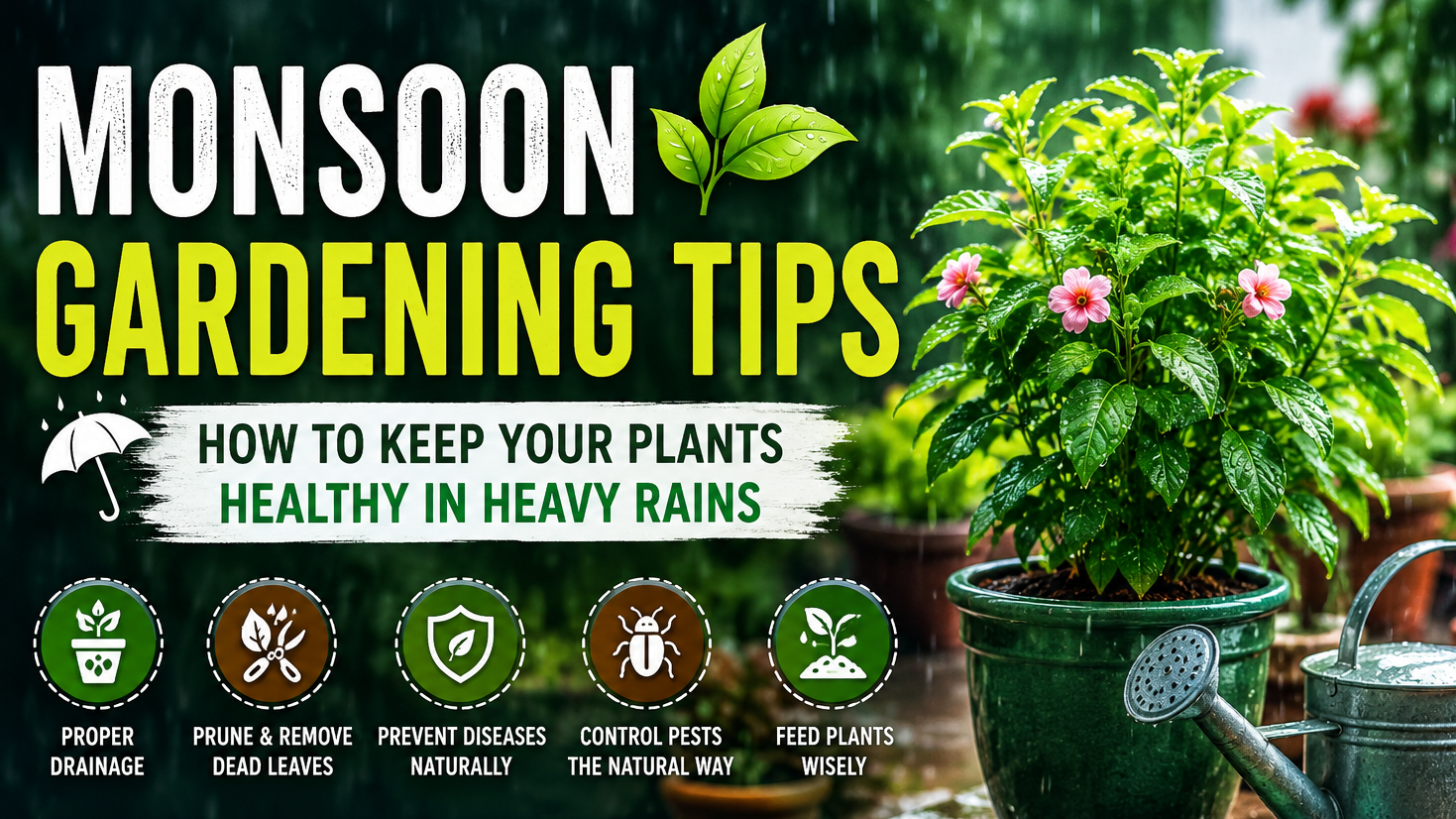
The monsoon season brings much-needed relief from the scorching summer heat, transforming gardens into lush green spaces. However, while rainfall is beneficial for plants, excessive rain can also create several challenges such as waterlogging, fungal diseases, root rot, pest attacks, and nutrient loss. Knowing the right Monsoon Gardening Tips can help you protect your plants and ensure they continue to grow healthy throughout the rainy season.
Whether you have a terrace garden, balcony garden, kitchen garden, or a large landscape, following these simple yet effective gardening practices will keep your plants thriving even during heavy downpours.
Why Monsoon Care is Important for Plants
Rainwater is naturally rich in nitrogen and free from harmful salts, making it an excellent source of hydration. However, continuous rainfall can lead to:
- Root suffocation due to waterlogging
- Fungal infections
- Yellowing leaves
- Pest infestations
- Nutrient leaching from the soil
- Weak plant growth
Following proper Monsoon Gardening Tips ensures your garden remains healthy despite unpredictable weather conditions.
1. Ensure Proper Drainage
The biggest threat during monsoon is stagnant water around plant roots.
How to Improve Drainage
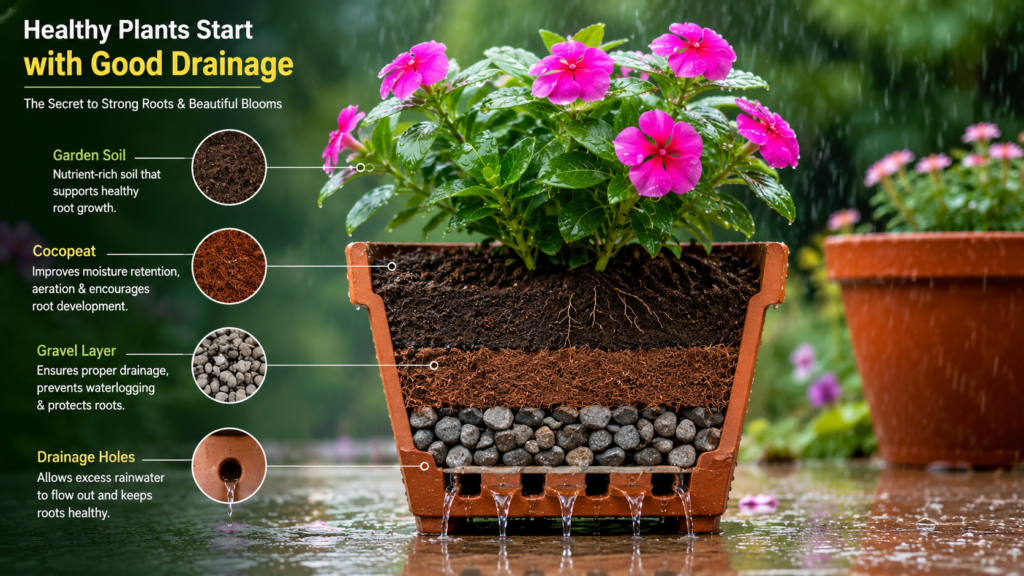
- Use pots with multiple drainage holes.
- Raise containers slightly using pot stands.
- Add gravel or broken clay pieces at the bottom of pots.
- Mix sand or perlite into heavy soil.
- Create drainage channels in garden beds.
Healthy roots require oxygen. Standing water blocks oxygen flow and eventually causes root rot.
2. Avoid Overwatering
Many gardeners continue watering plants without considering rainfall.
Before watering:
- Check the soil moisture with your finger.
- Water only when the top 1–2 inches of soil feels dry.
- Reduce watering frequency during continuous rainy days.
Overwatering can be just as harmful as underwatering.
3. Protect Plants from Waterlogging
Heavy rains can flood pots and garden beds within minutes.
To avoid this:
- Move potted plants under shaded areas during heavy rain.
- Elevate pots using bricks or stands.
- Remove excess water collected in trays.
- Build raised beds for vegetable gardens.
One of the most practical Monsoon Gardening Tips is preventing roots from sitting in water for extended periods.
4. Prune Dead and Diseased Parts
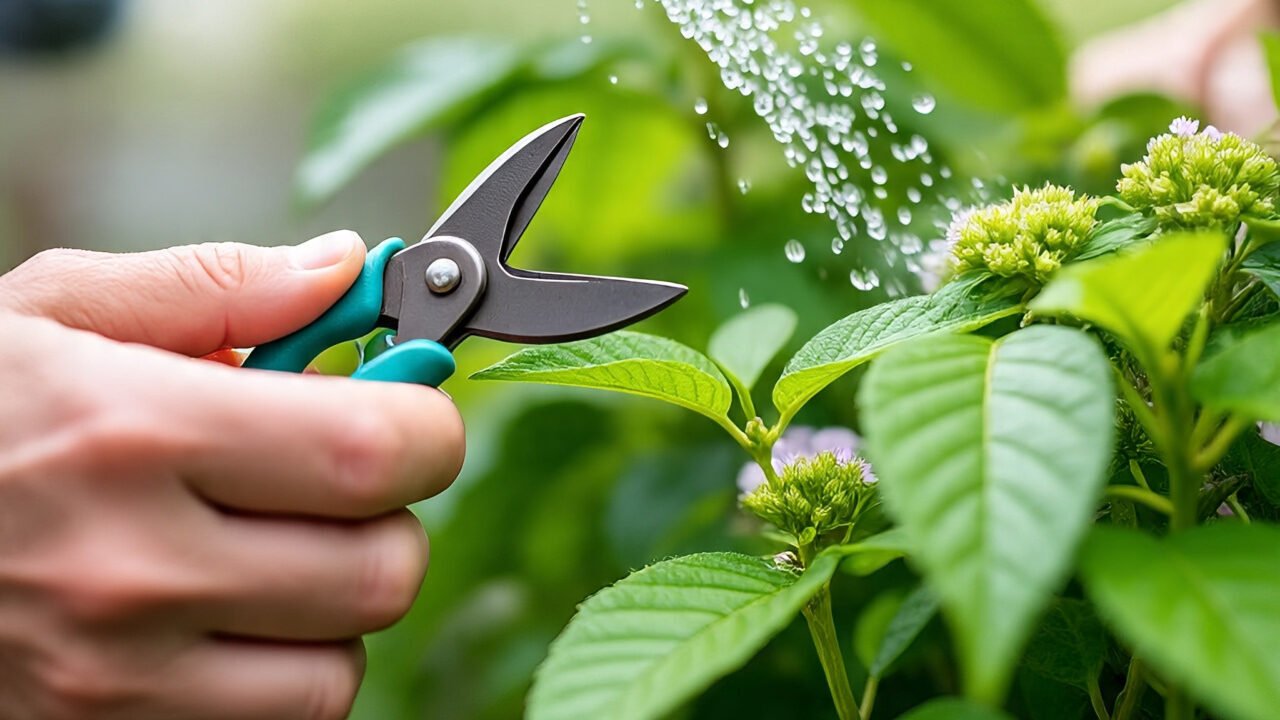
High humidity encourages fungal growth on dead leaves and weak branches.
Regularly:
- Remove yellow leaves.
- Cut damaged stems.
- Trim overcrowded branches.
- Remove fallen leaves from pots.
Pruning improves airflow and reduces disease spread.
5. Watch Out for Fungal Diseases
Rainy weather creates ideal conditions for fungal infections.
Common diseases include:
- Powdery Mildew
- Leaf Spot
- Anthracnose
- Downy Mildew
- Root Rot
Prevention Tips
- Water only around the roots.
- Avoid wetting foliage.
- Increase air circulation.
- Use neem oil spray every 10–15 days.
- Remove infected leaves immediately.
Early detection saves your plants from severe damage.
6. Control Pests Naturally
Monsoon attracts many unwanted garden pests.
Common pests include:
- Snails
- Slugs
- Aphids
- Mealybugs
- Caterpillars
- Mosquitoes breeding in standing water
Natural pest control methods:
- Spray neem oil solution.
- Use garlic-chili spray.
- Introduce ladybugs.
- Remove pests manually.
- Keep the garden clean.
Healthy plants naturally resist pest attacks better.
7. Improve Air Circulation
Humidity remains high during monsoon.
Plants placed too closely together trap moisture and encourage fungal growth.
Maintain adequate spacing between plants.
Prune dense foliage regularly to improve airflow.
Avoid overcrowding balcony gardens.
8. Add Organic Mulch Carefully
Mulching conserves soil health but requires caution during rainy weather.
Suitable mulching materials:
- Dry leaves
- Coco chips
- Rice husk
- Pine bark
- Straw
Keep mulch slightly away from the plant stem to avoid fungal infections.
9. Feed Plants Wisely
Heavy rain washes nutrients away from the soil.
Instead of heavy fertilization:
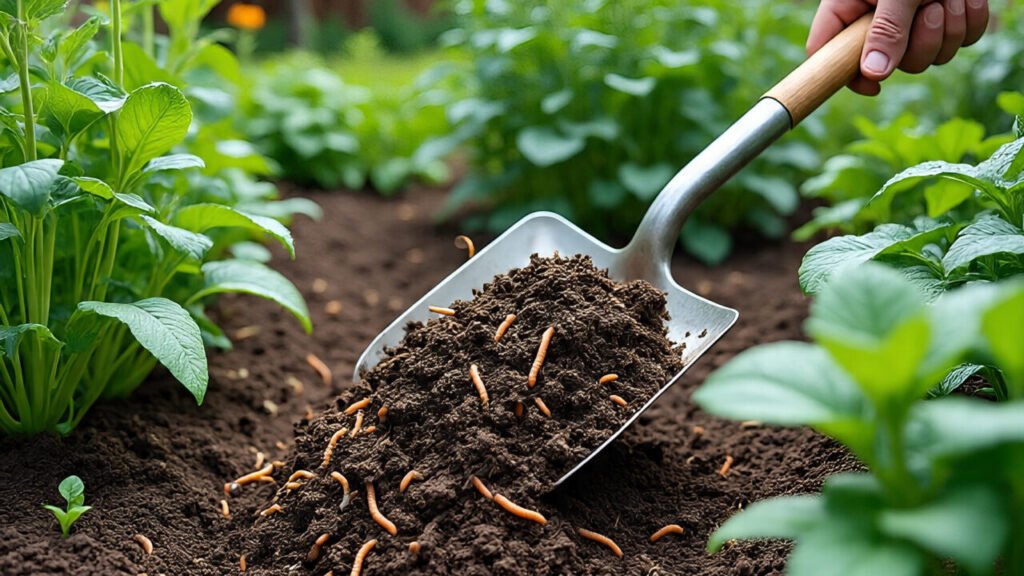
- Apply vermicompost.
- Use compost tea.
- Add seaweed extract.
- Feed with diluted organic liquid fertilizer every 2–3 weeks.
Avoid excessive chemical fertilizers during heavy rains as they can easily leach away.
10. Support Tall Plants
Strong winds often accompany monsoon showers.
Plants like:
- Tomato
- Hibiscus
- Sunflower
- Banana
- Papaya
may bend or break.
Provide bamboo stakes or garden supports to protect them from wind damage.
11. Clean the Garden Regularly
Clean gardens remain healthier.
Regular maintenance includes:
- Removing fallen leaves.
- Cleaning algae from pots.
- Discarding rotten fruits.
- Clearing clogged drainage.
- Eliminating standing water.
A tidy garden significantly reduces disease outbreaks.
12. Choose Rain-Friendly Plants
Some plants naturally thrive during monsoon.
Examples include:
- Hibiscus
- Rain Lily
- Periwinkle (Sadabahar)
- Jasmine
- Ixora
- Balsam
- Marigold
- Coleus
- Ferns
- Money Plant
These plants enjoy the increased humidity and rainfall.
13. Take Extra Care of Indoor Plants
Indoor plants also need attention during monsoon.
Tips include:
- Keep windows open for ventilation.
- Reduce watering.
- Rotate plants for even light exposure.
- Wipe dust and moisture from leaves.
- Ensure proper drainage.
Indoor humidity can also encourage fungal growth if ventilation is poor.
14. Harvest Vegetables on Time
Monsoon vegetables grow rapidly.
Harvest regularly to:
- Encourage new growth.
- Prevent rotting.
- Improve productivity.
Vegetables like okra, cucumber, beans, and chilies should be picked frequently.
15. Inspect Plants Frequently
The rainy season changes conditions quickly.
Inspect your plants every few days for:
- Yellow leaves
- Black spots
- Stem damage
- Root rot
- Insect attacks
- Mold growth
Early intervention prevents major problems.
These regular inspections are among the most effective Monsoon Gardening Tips for maintaining a healthy garden throughout the season.
Common Mistakes to Avoid During Monsoon
- Overwatering after rainfall
- Ignoring drainage holes
- Using too much fertilizer
- Leaving dead leaves in pots
- Crowding plants together
- Allowing standing water
- Delaying pest treatment
Avoiding these mistakes will greatly improve plant health.
Final Thoughts
The rainy season can either make your garden flourish or create unexpected challenges. By ensuring proper drainage, maintaining cleanliness, preventing fungal infections, controlling pests naturally, and providing balanced nutrition, your plants can remain healthy and vibrant throughout the season.
Following these Monsoon Gardening Tips will help your flowers bloom beautifully, vegetables grow abundantly, and ornamental plants stay lush despite heavy rains. With a little care and regular observation, your garden can become even more beautiful during the monsoon than at any other time of the year.
🌿 Need Expert Gardening Help?
At Super Maali, we help homeowners, apartment residents, and businesses create and maintain beautiful, healthy gardens all year round. Whether you need terrace gardening, balcony garden setup, kitchen garden installation, plant care, landscaping, or regular garden maintenance, our experts are here to help.
🏡 Visit Our Home Page: https://supermaali.com/
📞 Contact Our Gardening Experts: https://supermaali.com/contact/
Let Super Maali transform your green space into a thriving garden—rain or shine! 🌱